Showing posts with label Gentile. Show all posts

Tiffany S.


Introduction

“CROATOAN” imagine seeing that word while you were on a hiking trail, or even just walking, would you be scared? Because that's what happened to Captain John White when he came back from his 3 year adventure trying to  get back to Roanoke.                                                            
Chapter 1: The Voyages to a new world                                                                         On April 9 1585, there were 5 main ships, named the Roebuck, Red Lion,tiger,Elizabeth and Dorothy. The goal for them was to separate and then meet up at Puerto Rico. Tiger was supposed to go to “Baye of Muskito” on May 11. While waiting for other ships Sir Richard Grenville made relationships with the Spanish. Grenville was still waiting, so he built a fort. Not long after, Elizabeth arrived, soon after the fort was done. Later Grenville ended up getting bored and tired of waiting for the ships so he left on June 7. Later on in 1584, Sir Walter Raleigh was given the land of that is now present-day Virginia in North America by Queen ELizabeth 1. Raleigh thought that he could make all the other colonies in North America make his country more powerful and wealthier. Raleigh then sent out some ships to go explore the area. He sent Captain Arthur Barlowe and Captain Philip Amada on the ships to explore the area. The sailors ended up arriving in North Carolina on July 4 where they named the island “Roanoke” after fellow Native Americans like the “Croatans” and the “Secotans” that lived there. Captain Barlowe and Captain Amada brought two croatans named Manteo and Wanchese. Manteo and Wanchese told Raleigh about the land at Roanoke, and Raleigh decide that was a perfect area to establish a colony.                                                                   
                                                                                                                                                    The First Attempt                                                                                                      

Roanoke ended up being led by Sir Richard Grenville. He and other settlers then arrived at Roanoke in 1585. Grenville left behind 107 settlers with Ralph Lane while he went back to England to bring more men and new supplies and promised to be back by April. While Grenville was still in England the settlers made a fort at Roanoke, the settlers struggled to survive.They were always fighting with the local Native Americans for unnecessary reasons--like stealing a silver cup--they even lit their village on fire. April passed and there was no sign of Grenville so the settlers just waited. Later on, Sir Francis Drake was visiting the colony and offered to take them back to England to maybe see Grenville and they agreed, so they went. When Grenville came to Roanoke he had all the supplies and gatherings he needed. But all Grenville saw was an abandoned settlement. He then decided to keep a small group of men to keep a eye on Roanoke and went back to England.
 
             
Chapter 2: Hardships of Roanoke  

England then found a land and told Raleigh that this island had fish, animals, vegetables, fruit and even some nice people. A year later Raleigh sent some men there to start a colony. Some of the men were farmers. It was a little tough for them because their supplies were running short and they were barely struggling to survive. When the fighting between Roanoke and the English settlers broke off, the colonists of Roanoke returned back to England. In 1584, Raleigh got worried about the land and sent 115 colonists, like skilled farmers, back to Roanoke. The men hoped to discover Grenville’s men who had left a year before. All they found were some human remains, but they didn’t care and started to build the new settlement. Later on, after their arrival on August 18, 1587, a little girl named Virginia Dare was born. Virginia Dare turned out to be the first born in the America to English parents.                                                                                                                                                             
Virginia Dare 
  Chapter 3: Lost Colony             

In 1587,  Raleigh took 115 colonists to make a new colony on Chesapeake Bay. It was led by Captain John White. White was the Governor of the 1587 colony.They first needed to go to pick up some people at Roanoke who were still there from when Grenville was there the previous year. When they arrived on July 22 1587 all they saw was a human skeleton that could've been the remains of a Englishman. Later, White tried to talk to the Croatan to asked if they knew what happened. But the people that Ralph Lane fought with refused to talk with White and Raleigh. Later White went back to England to explain what happened but left 115 behind. White started to sail in late 1587. The problem was that since it was late 1587 crossing the Atlantic would be tough. Then the Spanish war happened during which all the English ships that came to White didn't have the time to come back to Roanoke at the time.

                                  Maltese Cross
                                                                                                                                                                   Since the war with Spain went on for awhile White didn’t get to come back until three years later! But when White came back with    John Watts and Raleigh all they saw was nothing. They couldn't find anyone there, not one out of the one hundred. But there wasn't even any sign of any craziness that might have gone down. One thing they did find was the word “CROATOAN” carved into a post, also the letter cro on a tree. White remembered that he told the colonists to make a Maltese Cross if they were in danger. But they never found a cross.                                                                                                                                                                                                                                             Conclusion                                                                                                                                                                                                                                                                                               What this whole entire passage is about is to make people learn about how things were back then. What the mysteries people had back then. Challenges people had to go through everyday.  About what happened back in history days. This whole passage was about Roanoke and the challenges they went through like trying to survive everyday, trying to find food everyday, trying to keep track of everyone everyday.   Things were not easy back then. Learning about this  topic was very interesting. What this passage is about was what they did every day, like farming, killing animals, going to war. They didn't just get to go to the grocery store and get what they wanted.                                                                                                               


Kasey Z.

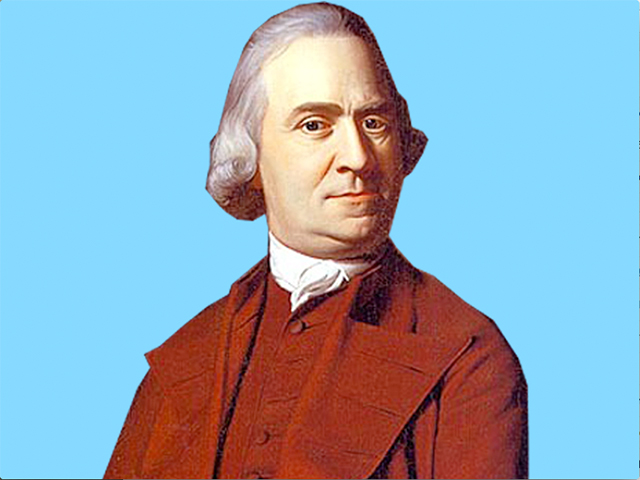
THE LIFE OF SAMUEL ADAMS


This is a portrait of Samuel  Adams.


INTRODUCTION
“THE COUNTRY SHALL BE INDEPENDENT, AND WE WILL BE
SATISFIED WITH NOTHING SHORT OF IT”. This is a quote from Samuel
Adams. Samuel Adams was not in the war, but he was a messenger during it.
He had  many other jobs along with his cousin, John Adams, our country’s
second president. Today you will learn about Samuel Adams as a child, his role
in the war, and his life after the war.

CHAPTER 1 EARLY LIFE
Samuel Adams was born on September 27, 1772 in the British Colonies.
Sam was one of 12 children. Only three of the Adams children survived. When
Samuel Adams was a kid he went to Dame school.

Samuel Adams became interested in politics when he was in Harvard. After
Adams graduated from college he tried to go into a number of jobs, but he did
not know what he wanted to do.


He got none of them because of his involvement in politics. His mother was
very religious and a devout Puritan. His mom’s name was  Mary and his dad’s
name was Samuel Adams Sr. Young Sam had his early education in Latin School.
Sam had two siblings. His brother was named Joseph. His sister was named
Mary.


He graduated in 1738 to go to Harvard. Sam graduated from college in 1740.
If you grew up in Britain or the New World during this time period,  then life
must have been a lot harder than life is now.


CHAPTER 2 WAR LIFE
When the war began in 1775, Samuel Adams was a messenger. He was also
an opponent of British taxation. Samuel Adams was a patriot from 1777 - 1781.
During this time, Adams repeatedly visited  Massachusetts Continental
Congress.

He told people news about the war and when redcoats were in town. He would
spy on them and tell the colonists what the redcoats were doing. This makes me
think that Samuel Adams is very lucky because being a messenger or a spy in
the war is a very dangerous job.

Imagine being on a horse telling people what the redcoats are doing and having
the wind blowing in your hair, with your heart racing in hopes of bringing
freedom to the colonies.  Beside being a messenger, Adams did many other
jobs. He was a member of the Sons of Liberty and he was a statesman. The Sons
of Liberty was a group of men who were an organized group in the Thirteen
Colonies.

When the war was happening, Samuel and John went to Pennsylvania for a
meeting for the Sons of Liberty. They stopped at an inn and a tavern. John
convinced Samuel to get onto a horse and he did, but he got a bad cramp after
the ride.

Samuel also organized the Boston Tea Party. He played a role in the American Revolution.
On July 4, 1776 he signed the Declaration of Independence. He also served as governor of
Massachusetts from 1794-1797.


This is the map of were Samuel Adams and John Adams went on to go to Pennsylvania.

CHAPTER 3 AFTER LIFE
After the war Samuel Adams FINALLY got on a horse and his cousin,
John Adam was running for president of the United States. Samuel Adams
married Elizabeth Checkley from 1749-1757. Samuel Adams had five
children with his first wife, but only two survived. His kids were named Samuel
Adams and Hannah Adams.

He then got married to Elizabeth Wells in 1764, 7 years after his first wife died.


Samuel Adams died because of a tremor disorder. He died at the age 81 on
October 2, 1803, and was interred at the Granary Burying Ground in Boston.


CONCLUSION


Clearly, Samuel Adams was one of the most famous people of the  
American Revolutionary War. From a young age, Sam Adams was very
intelligent. During the war Sam Adams was very brave because being a
messenger in the war is a very scary job. After the war Sam Adams faced a
lot of challenges. Do you think you could be as brave as Samuel Adams was
during his life?


  • He was part of the Democratic-Republican Party.
  • His first job was at a  counting house (it is a old bank)
  • He failed being a brewer and a newspaper publisher.
  • His zodiac sign is Libra
  • His son died in the war of an illness and he was surgeon the war
  • He worked for John Hancock.
  • He helped draft the Massachusetts Constitution in 1779.


  • DECLARATION of INDEPENDENCE = Statement of adopted by the Second
Continental Congress.
  • STATEMENT =  a definite or clear exasperating something in speech or writing,
  • OPPONENT = someone who is against you or frightens you.
  • SONS of  Liberty = a organized group of men in the Thirteen American Colonies
that fought for colonists rights.

Samantha R.

George
Washington


Introduction            


Did you know that George Washington was only 11 when his
father died? After his father died he toughened up. At the age of 14
George was as strong as any man. These are some interesting facts
about George Washington. George Washington faced many
hardships in his life,but he is still a very famous person and
president. In this book you will learn about George growing up,
George fighting in the Revolutionary war, and  George’s life after
the Revolution.

Chapter 1 : Growing up


George was born on February 22,1732. At the age of 3 he moved to
Hunting Creek.
Shortly after George's father died, (George was 11), his brother
(Lawrence) got married. After Lawrence got married he lived on
Mount Vernon. Life was pretty good on Mount  Vernon, there were
many parties and balls there.
For the balls and parties George wore fine new silk clothing.  
At the age of 14 George wanted to go to the sea and join the Navy,
but his mother would not let him. Once George’s mom would not
let him go to sea he found other things to do, George became an
surveyor! A surveyor measures land.
Also when George was 20 Lawrence became ill, George took him to
Barbados and hoped that he would get better there, but he did not.
Lawrence returned to Mount Vernon to die.
Soon after Lawrence’s death, George Washington joined the
Virginia army as a soldier. Also, when George joined the army
there was trouble with the English and the French                               
(French and Indian war). They were fighting over the
Wilderness” (The Wilderness was an place filled with fine coated
animals and Indians.) Indians sold fur from animals to the French
and English. Both the French and the English thought they owned
the Wilderness which caused them to fight. This fight is now known
as the French and Indian war. Once George found 50 soldiers in the
woods! When he saw them, they battled.(This was the first battle
George had ever seen!) After that there was more fighting and this
fighting turned into a war.


Chapter 2: Revolution


The Continental army was formed by George Washington in the
Revolution. This was the same war when America won
their independence from England.  George Washington was appointed
commander of the continental army on June 14 1775.
He played a leading military and political role in this war.
George Washington crossed the icy, freezing Delaware River not
once but twice in the cold month of December.
After a few months of fighting in the war, supplies started to
disappear and these issues  became one of George’s greatest
problems.
Mount Vernon barely escaped destruction in this war. (Mount
Vernon is where George's plantation house is.) .  A British ship
anchored  by the plantation. Some of Washington’s slaves escaped
to the ship.  The British then demanded supplies in addition to
keeping the slaves instead of burning down Mt. Vernon.
There were also several battles in the Revolution that George
attended to (Siege of Boston, Battle of Long Island, Battle of Kip’s
Bay, Battle of Harlem Heights, Battle of White Plains, Battle of
Fort Washington, Evacuation of Fort Lee, Battle of Trenton, Battle
of second Trenton, Battle of Princeton, Battle of Brandywine,
Battle of the Clouds, Battle of Germantown, Battle of White
Marsh, Battle of Monmouth, and Siege of Yorktown.). George
Washington actually lost most of these battles.                                                    


Chapter 3: Life after Revolution


The Revolution was an sad and harsh time, but somehow
George Washington survived it! George Washington after the war
then became the first president.
George went up against John Adams. He went and did his first
two terms but when it was time for the third election he did not
want to run. Then people decided that you can only run for two
terms. George Washington was president for 8 years. (1787-1797)  
After his presidency, he spent the rest of his life on Mount Vernon.
The plantation was very large and he spent his time caring for it.
He died 2 ½ years after he left office.

Conclusion:

George Washington was clearly a big help in the colonial time period.
George Washington faced many hardships when he was growing up
such as his father’s and brother’s death. He was a great
commander/chief and very dedicated to the Army and his country.
He did a great job as our first president and showed through everything
he did how much he loved his country.

Isabella P.


BETSY ROSS


                                     TABLE OF CONTENTS
Introduction
Chapter 1: Betsy’s life
Chapter 2: Her marriage
Chapter 3: The American Flag
Conclusion


                                           Introduction:
“Our hearts aching, our prayers praying, our flags waving, never forget.” -Betsy Ross. This famous quote has a very important meaning. It means that  you should never forget about the flag because it is a very important part of our life.  This is also an important quote because this is telling you to respect our country. She is saying that our hearts are aching and we are praying. We are waving our flags is what you should never forget. She is a amazing person because she had made the first official flag.

                                           Chapter 1: Betsy’s life.
Betsy Ross was born on January 1, 1752. Her parents Samuel and Rebecca Griscom named her Elizabeth. Her parents called her Betsy.  She lived in Pennsylvania, which was one of the 13 colonies. It was ruled by Britain at that time. She loved to sew, and she was very good at it. She went to the Society of Friends school. There she learned to read, write, add, and subtract. At home, she helped her family with cooking, cleaning, washing, mending, and sewing. For fun, Betsy and her family went on picnics.  Her dad was a carpenter. He helped build the bell tower at Independence Hall, where the Declaration of Independence was signed and adopted. She worked at her sewing shop until she was 75 years old. She died in 1836 at the age of 84. She worked in a sewing school. She continued working in her shop and helped the Pennsylvania Navy by sewing flags for their ships. After Betsy’s death all of her family members said how Betsy often told them her story of how she sewed the first american flag. Betsy’s parents were both Quakers. Quakers were people who believed in God and went to church. She went to a school where she learned how to sew mattresses, chair covers, and window blinds.  Historians wonder why Betsy Ross got married so many times.  She was born in Pennsylvania and lived there her whole life.


                                       Chapter 2: Her Marriage
She worked in a sewing school were she met John Ross. In 1773, at 21 years old, Betsy Ross crossed the river to New Jersey to elope (run away ) with John Ross. They secretly got married without their parents or any family members knowing. They did this because John Ross wasn’t a Quaker and Betsy’s parents wanted her to marry a QuakerThey started their own shop and John Ross joined the Militia. He died after barely two years of marriage. John Ross was hurt in a explosion and died from his wounds. In 1777, Betsy married Joseph Ashburn. They had two children. Joseph was a captain in the Continental Army. His boat was captured by the British during a trip to get supplies. He was put in prison, and died. Betsy married for a third and final time in 1783.  She and her husband John Claypoole had five daughters. John died in 1817. It must have been sad for Betsy that she got married three times because all of her husbands died.
   Chapter 3:  The American Flag.
          Many people believe that Betsy sewed the first Stars and Stripes flag. Stars and Stripes is another name for the American flag.  The first flag had 16 stars on it. The stars were in a circle.  The American flag has 13 red stripes to represent the 13 original colonies.  George Washington visited Betsy’s sewing shop. He showed her a sketch of the flag that he wanted.  He wanted 13 stars  arranged in a circle to represent the original 13 colonies. He wanted the stars to have 6 points ,but Betsy suggested the flag to  have a five pointed star instead. They decided to make the flag with a five pointed star. Within a few days she had the flag done. It was the first official American Flag. The colors of the flag that she sewed were old glory blue, old glory red, and white. Ever since then the flag has been the same colors. It has changed over the years ,but the colors have stayed the same. January 1, 1776 the Grand Union Flag got raised for the first time. It must have been a very exciting moment for Betsy Ross. Just imagine if you had a very big accomplishment that you had achieved, and the whole world saw it. The flag had 13 red and white stripes alternating with the British flag in the upper left corner. It represented the Continental Army’s fight for freedom.


                                     Conclusion:
Clearly, Betsy Ross was a very important person in Colonial Times. Betsy Ross had a life that most people nowadays wouldn’t. Betsy Ross must have been devastated that all three of her husbands died in the war. She must have been so surprised that George Washington asked her to sew them a flag. Betsy Ross must have been a very famous person in the Colonial Times. What would America be like today if Betsy Ross didn’t make the flag?